
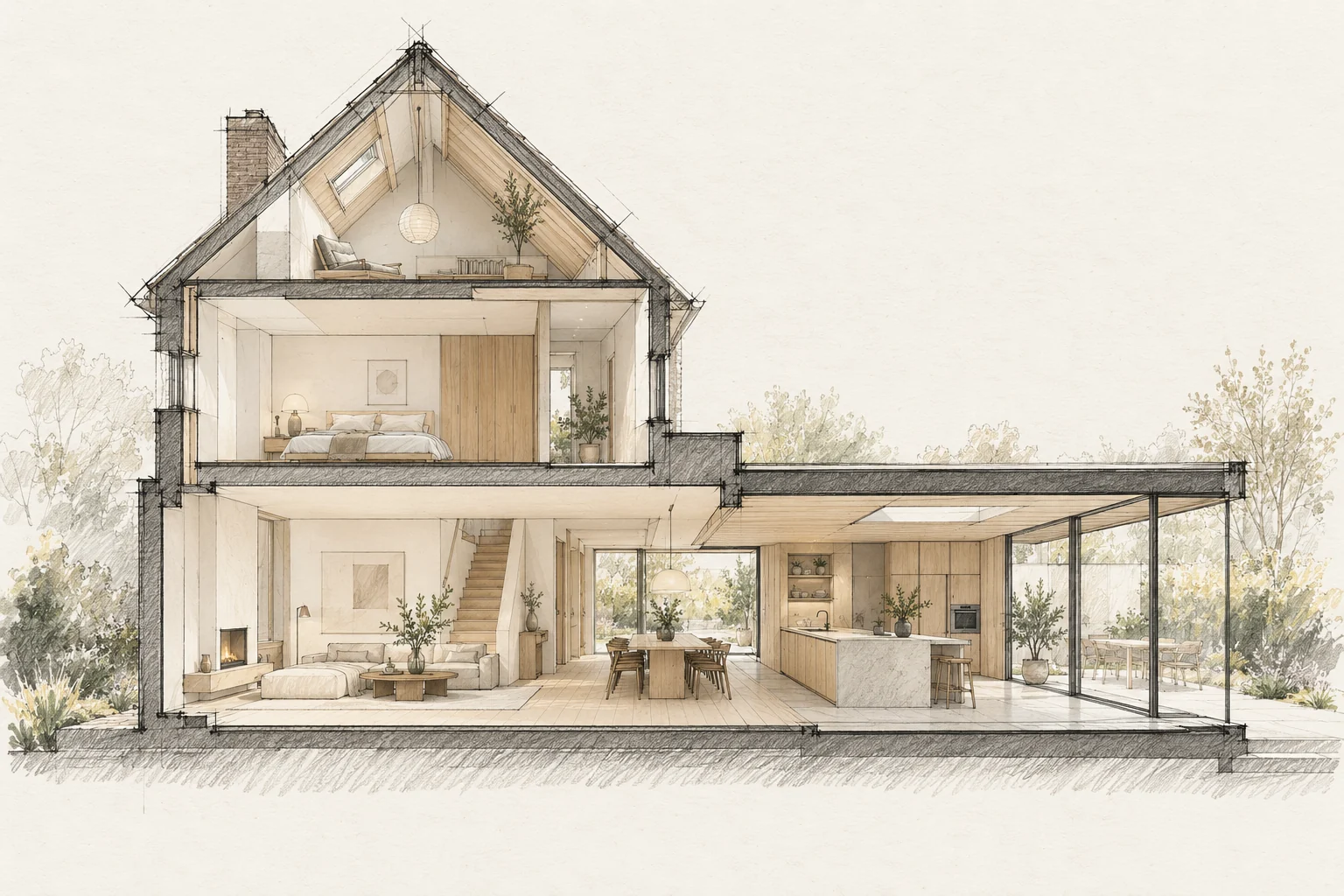
Material choice influences ageing, cleaning and junctions as well as first impressions.
Which trade-off matters?
Exact reproduction and a clearly contemporary addition are different design choices. Compare their junctions; an almost matching brick or profile can look less coherent than a carefully chosen contrast.
View real samples
A screen cannot reliably show colour and texture. View samples together in the home's light, including joints, edges and fittings.
Match the use
A sheltered wall and a heavily used floor face different demands. Discuss moisture, sunlight, cleaning and physical wear for the actual application.
Allow for later maintenance
Record which elements are new, repaired or retained. This distinction helps identify the appropriate finish and maintenance method for each material later.
What the drawing needs to explain
Draw a scaled elevation showing existing and new windows together. Resolve the roof-edge, wall and window junction before deciding from an atmosphere image alone.
A situation to test your plan against
A garden room beside a house with distinctive facade details needs a deliberate transition. First record the lines that give the existing building its identity: window heads, roof edges and the scale of its brickwork.
Questions for your own property
- Were samples viewed in real light?
- Does the material suit its use?
- Is the maintenance practical?
Must an addition use the same style as the house?
Not necessarily. Compare scale, rhythm and material transitions. Review two junction details before choosing reproduction or a recognisably new addition.
Illustrative design situations, not evidence of completed work. Assess decisions against the actual property.